
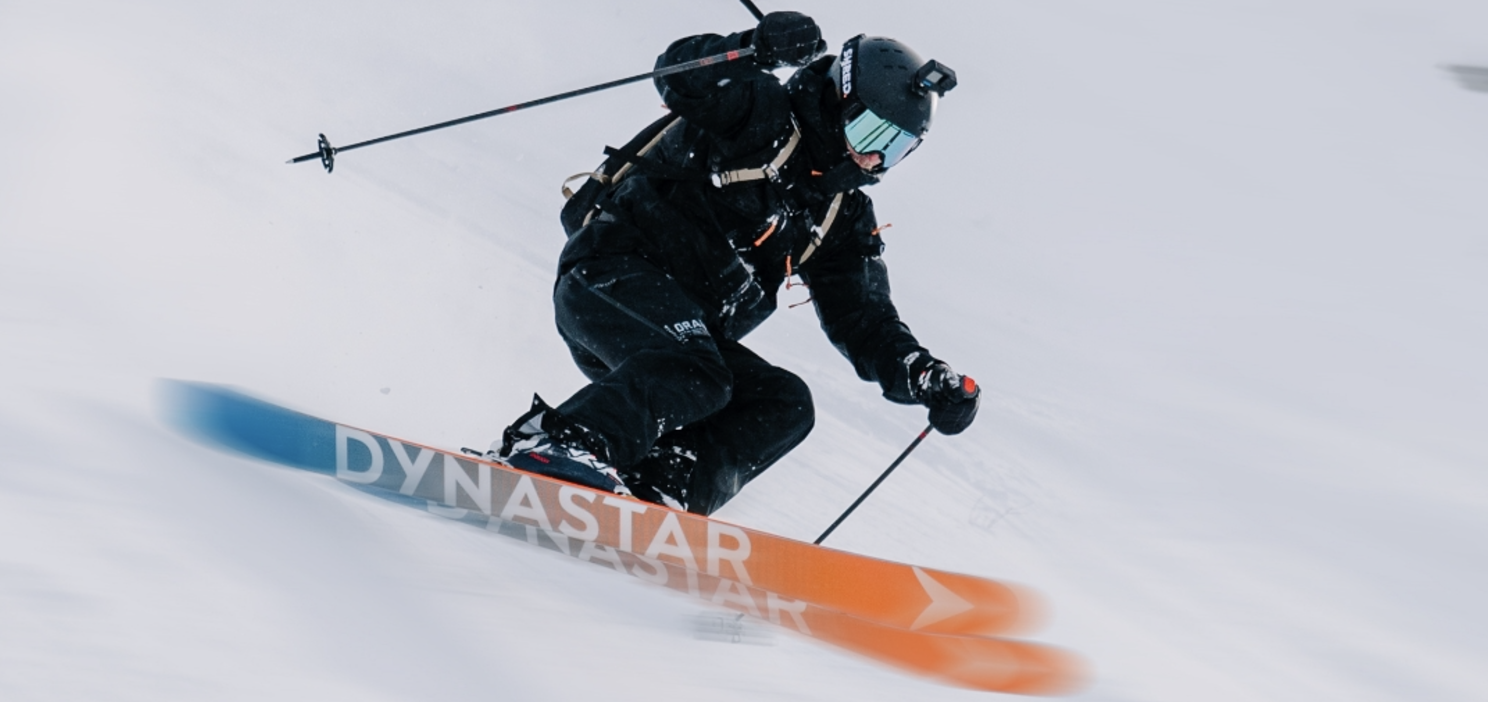
Because equipment matters!
How to choose the right downhill ski equipment? Downhill skiing is a sport that requires the right equipment to ensure comfort, performance, and safety on the slopes. Choosing the right equipment is essential, whether you’re a beginner or an expert. Here’s a guide to help you understand the main categories of equipment: skis, boots (AND the soles), and bindings.

Choosing Your Skis
Skis are the centerpiece of your equipment. They must be adapted to your level, your skiing style, and the types of terrain you plan to ski. Yes, it’s much more complicated than color! See our selection of alpine skis.
Main ski categories :
- All-mountain skis: Perfect for skiers who enjoy varied terrain. They offer a good balance between on-piste and off-piste performance.
- On piste skis : Designed for optimal performance on groomed slopes. They have good grip and facilitate turning.
- Freeride skis : The must for off-piste and powder. They are wider for better floatation.
- Freestyle skis : Designed for skiers who enjoy tricks and features in snow parks. They are lightweight and often symmetrical for bidirectional use.
- Slalom racing skis : These skis are short and stiff, with a shorter turning radius (between 12 and 15 meters), offering great maneuverability for making tight, fast turns. They are designed for competitive skiers who prioritize responsiveness and speed on technical courses.
- Giant Slalom (GS) Skis : These skis are longer and more stable (turn radius of 18 to 30 meters), suitable for more open and fast courses. They offer better stability at high speeds, with increased precision for competitive skiers.
Criteria to consider :
- Length : Choose skis that reach between your chin and the top of your head, depending on your skill level and style.
- Width : The wider a ski, the better it will perform off-piste, but the less maneuverable it will be on piste.
- Stiffness : Softer skis are more forgiving and suitable for beginners, while stiffer skis offer more precision for experts.
- Turn radius : The turn radius determines how easily the skis will turn. A shorter radius (less than 14 meters) is ideal for tight turns and piste skiers. A longer radius (more than 20 meters) is better suited to skiers who prefer wide turns and better control at high speeds.


Cramps or pressure in your feet while skiing?
Did you know your boots can be adjusted to eliminate these discomforts? Thanks to thermoforming, your boots can fit your feet perfectly. Consult a specialist for a custom fitting and discover the options that make all the difference :
Custom liners :
- Intuition and ZipFit for optimal comfort, better support, and even pressure distribution.
- Perfect for improving your performance and skiing all day without discomfort.
Types of soles for absolute comfort :
- Merino insulated soles : natural warmth and moisture management.
- Heated soles : ideal for skiers sensitive to the cold.
- Arch-friendly soles : to prevent pain in flat feet or high arches.
- Custom soles : designed specifically for your feet, they offer unparalleled support.
Quick advice: Take the time to adjust your boots this winter – your feet will thank you after every run!
No more blisters and frostbite. Our services aren’t limited to comfort: we also work to improve the performance of your equipment. A well-fitting boot means precision, increased control, and optimal responsiveness. With boots perfectly adapted to your body shape, every movement is better transferred to your skis, allowing you to ski more efficiently and take full advantage of your technical potential.
Thanks to our specialized tools (alignment table, podoscope, Ultracam boot press, sander, etc.), our workshops allow for precise adjustments adapted to your specific needs.

Choosing Your Bindings
Bindings connect your boots to your skis and play a crucial role in safety. They must be precisely adjusted according to your weight, skill level, and skiing style. See our bindings selection.
Main criteria :
- DIN value : Indicates the level at which the bindings release in the event of a fall. Light skiers or beginners should use lower values (4-7), while experts should opt for higher values (8-14).
- Compatibility : Make sure your bindings are compatible with your boots.
Binding Types :
- Standard alpine bindings (piste).
- Hybrid bindings for touring and downhill skiing.
Safety rule : Always entrust the assembly and adjustment of the bindings to a professional to ensure optimal operation.
Additional tips for a successful choice
- Refer to a specialist : Visit one of our specialty stores for advice tailored to your body shape and style.
- Try before buying : Many companies offer ski tests during demos at Mont-Orford, a great way to find the best fit for you.
- Don’t neglect maintenance : Have your skis waxed and sharpened regularly to optimize their performance.

